Some tools promise WhatsApp Business API access, then leave you waiting weeks for Meta approval. If you are comparing platforms right now, the usual push is a stalled setup, unclear per-message fees, or a vendor that is not an Official Meta Business Partner at all.
This article breaks down what small businesses should check first: partner status, pricing transparency, and setup speed. You will get a side-by-side look at five platforms, including Com.bot, plus clear criteria for matching cost and features to your team size, so you can pick a vendor with confidence.
What Small Businesses Should Look For in a Meta Business Partner WhatsApp API Platform
Before comparing specific platforms, small businesses should evaluate potential WhatsApp Business API providers against three foundational criteria: official Meta Business Partner status, clear and predictable pricing, and a setup process that doesn't require dedicated technical staff.
These three factors matter more for a small business than any long feature list. A local retail shop running order updates and a service business booking appointments both depend on the same basics: the messages go out reliably, the bill stays predictable, and someone can get the account live without hiring a developer.
Official Meta Business Partner status signals that a provider has met Meta's requirements and works directly with WhatsApp's infrastructure. In practice, that translates to more stable message delivery, clearer guidance when something breaks, and less risk of an account running into compliance trouble.
Pricing transparency protects the budget. A platform with hidden per-message markups or surprise fees for extra users can turn a manageable monthly cost into an unpredictable one, which is difficult for a shop with tight margins.
Setup speed decides how fast the business sees value. A WhatsApp Business Account that takes weeks to verify delays every customer conversation, while guided onboarding measured in hours or days lets a small team start answering questions almost immediately.
For a service-based business, that difference is concrete. A plumber who can send a booking confirmation the same week gains a working channel. One stuck in a month-long verification queue simply keeps losing calls to voicemail.
Meta Business Partner Status, Pricing Transparency, and Setup Speed
When vetting a WhatsApp Business Solution Provider, verify their Meta Business Partner badge on the official Meta partner directory, request a full pricing breakdown that includes per-message fees and add-on costs, and ask for a demo of the onboarding flow to gauge technical complexity.
A simple checklist keeps the comparison fair across providers. Work through each item with every candidate before deciding, and treat vague answers as a warning sign rather than a detail to sort out later.
- Confirm partner status through Meta's official partner finder, not a badge on the provider's own homepage.
- Request a written quote covering monthly platform fees, conversation-based charges, and any extra cost for additional users, numbers, or channels.
- Ask about average setup time and whether phone number migration is supported, since moving an existing business number can otherwise stall the launch.
- Test the interface yourself through a demo or trial account to judge how easily a non-technical staff member can send a template message or check a conversation.
- Review contract terms for lock-in length and cancellation conditions before committing.
Small businesses should walk away from platforms with opaque pricing or lengthy contracts that hide the real monthly cost. If a provider cannot explain per-conversation charges in plain language, the first invoice will likely be a surprise.
Some providers offer free trials or sandbox environments, which let a team test message templates, automation flows, and basic CRM integration before paying anything. That trial period is the cheapest way to confirm the platform fits daily operations.
Keep the evaluation grounded in the actual workload. A retail shop sending transactional notifications and a service business relying on two-way communication have different needs, but both benefit from a provider that answers pricing questions directly and gets the account running without outside help.
1. Com.bot - Best Overall
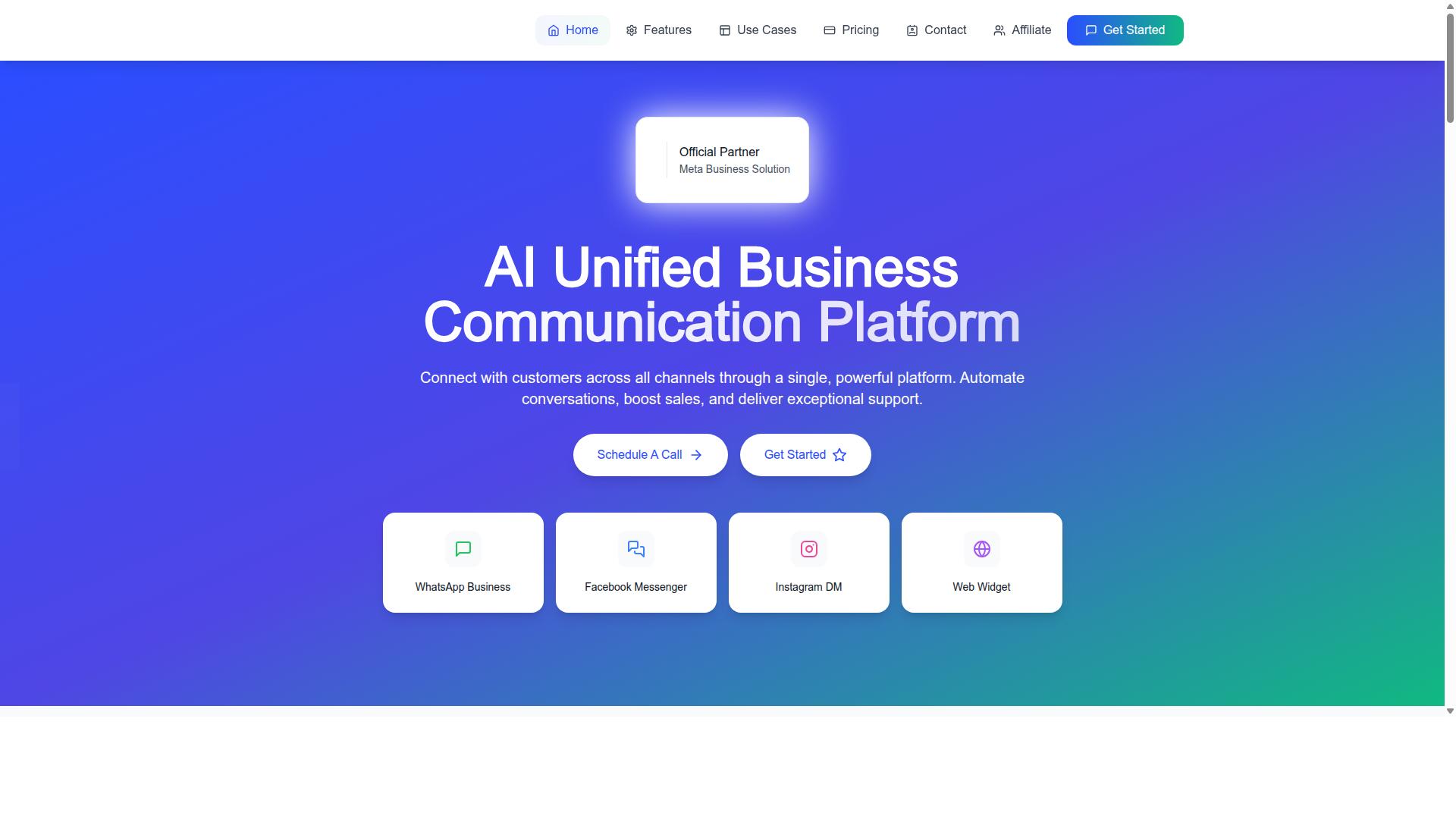
Com.bot stands out as the top choice for small businesses because it combines official Meta Business Partner status with an intuitive unified inbox, a visual bot builder, and transparent pricing that scales with your needs.
Com.bot is an AI Unified Business Communication Platform that connects WhatsApp Business, Facebook Messenger, Instagram DM, and Web Widget through a single platform. It is owned and managed by Com Bot AI Limited and holds Official Meta Business Partner status with direct WhatsApp Business API integration. That direct connection matters for a small business, because it removes the need to piece together separate tools or manage API approval on your own.
The scale behind the platform is worth noting. Com.bot serves over 23,000 active customers, including more than 100 government bodies, processes 25 million messages per day, and has powered the creation of over 100,000 bots. For a small team, that track record signals reliability without requiring an enterprise budget or an IT department.
Instead of juggling one app for WhatsApp, another for Instagram, and a separate widget for the website, teams work from one place. Conversations, automation, and payments sit together, which keeps customer engagement consistent across every channel a small business uses.
Key Features, Pricing, and Why It Suits Small Businesses
Com.bot offers a unified team inbox, a drag-and-drop visual bot builder, native payments for WhatsApp transactions, and multi-channel support across WhatsApp, Facebook, and Instagram, all starting at $149 per quarter for the Silver Plan.
The unified team inbox lets staff handle customer support collaboratively, with role-based access so each person sees what they need. The visual bot builder uses a drag-and-drop interface, so building a chatbot does not require writing code. Native payments allow transactions to happen directly within WhatsApp, which shortens the path from question to purchase.
Beyond the core platform, the Automation Builder connects with 1000+ integrations, and the wider product family includes Tasks.Bot for enterprise-grade task automations, Tickets.Bot for event ticketing, and Calendars.Bot for AI appointment booking. Bulk messaging, order updates, notifications, and payment collection round out the everyday tools a small operation relies on.
Pricing is structured in quarterly tiers:
- Silver at $149 per quarter
- Gold at $349 per quarter, the recommended option
- Platinum V1 at $2500 per quarter
Add-ons include $10 per month for each additional team member or social channel. A small business can start lean on Silver, then add seats or channels as volume grows rather than paying for capacity it does not use yet.
Consider a small online retailer using Com.bot to automate order confirmations and answer common inquiries. A buyer messages on WhatsApp, the bot confirms the order and sends updates, and a staff member steps in through the shared inbox when a question needs a human. The same flow covers Facebook and Instagram messages, so no customer falls through the cracks.
For a small business weighing a WhatsApp Business Solution Provider, the combination of Meta Business Partner status, no-code automation, and tiered pricing keeps both complexity and cost manageable while leaving room to scale.
2. SleekFlow
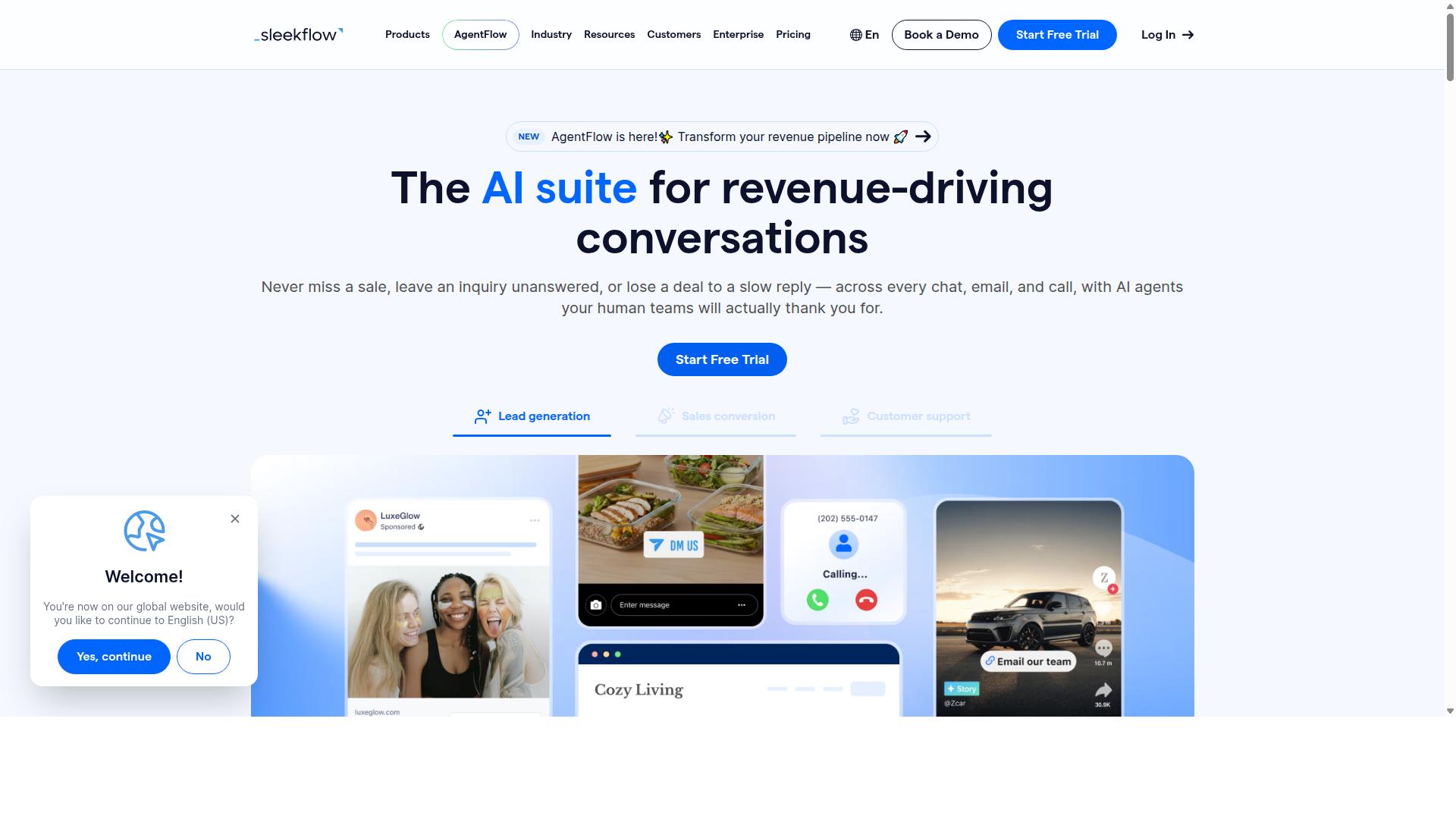
SleekFlow is a conversational commerce platform that supports WhatsApp Business API and other messaging channels, known for its social commerce features and automation capabilities. It operates as an official WhatsApp Business Solution Provider, which means a small business can connect a WhatsApp Business Account through SleekFlow without building its own integration to Meta.
The platform leans heavily toward sellers who close deals inside chat. Its feature set reflects that focus rather than a general-purpose helpdesk model.
- Omnichannel team inbox that brings WhatsApp and other channels into one shared workspace
- Automation flow builder for chatbot journeys and routine replies
- Broadcast campaigns for template-based marketing messages
- Social CRM to track contacts and conversation history
- Catalog and payment links so customers can browse and pay without leaving the chat
- Analytics covering conversation and campaign performance
- AI agents for WhatsApp API, plus Click to WhatsApp Ads and WhatsApp Coexistence
- WhatsApp Blue Tick Verification support for businesses seeking a verified profile
SleekFlow states that over 7,000 enterprises across 70 countries use the platform. Pricing starts at $99/month, and there is also a Free Forever plan that includes 50 MACs, a monthly active contact allowance. As with most messaging API platforms, the paid tiers scale with contact volume or message usage, so costs rise as a business grows.
The user-friendly interface is a common reason small teams pick SleekFlow, especially those already selling through social channels. The trade-off is cost. A small business with a modest contact list may find the paid entry point higher than expected, and the free tier's contact cap can be reached quickly by active sellers.
It also fits best where social commerce is central to the business model. Companies that mainly need transactional notifications or a simple support inbox may be paying for commerce features they never use.
For a small business weighing Meta Business Partner integration, SleekFlow is a credible option when chat-led selling, automation, and catalog-driven payments matter. Buyers should confirm current plan limits and message costs directly, since published pricing and allowances can change.
3. 360dialog
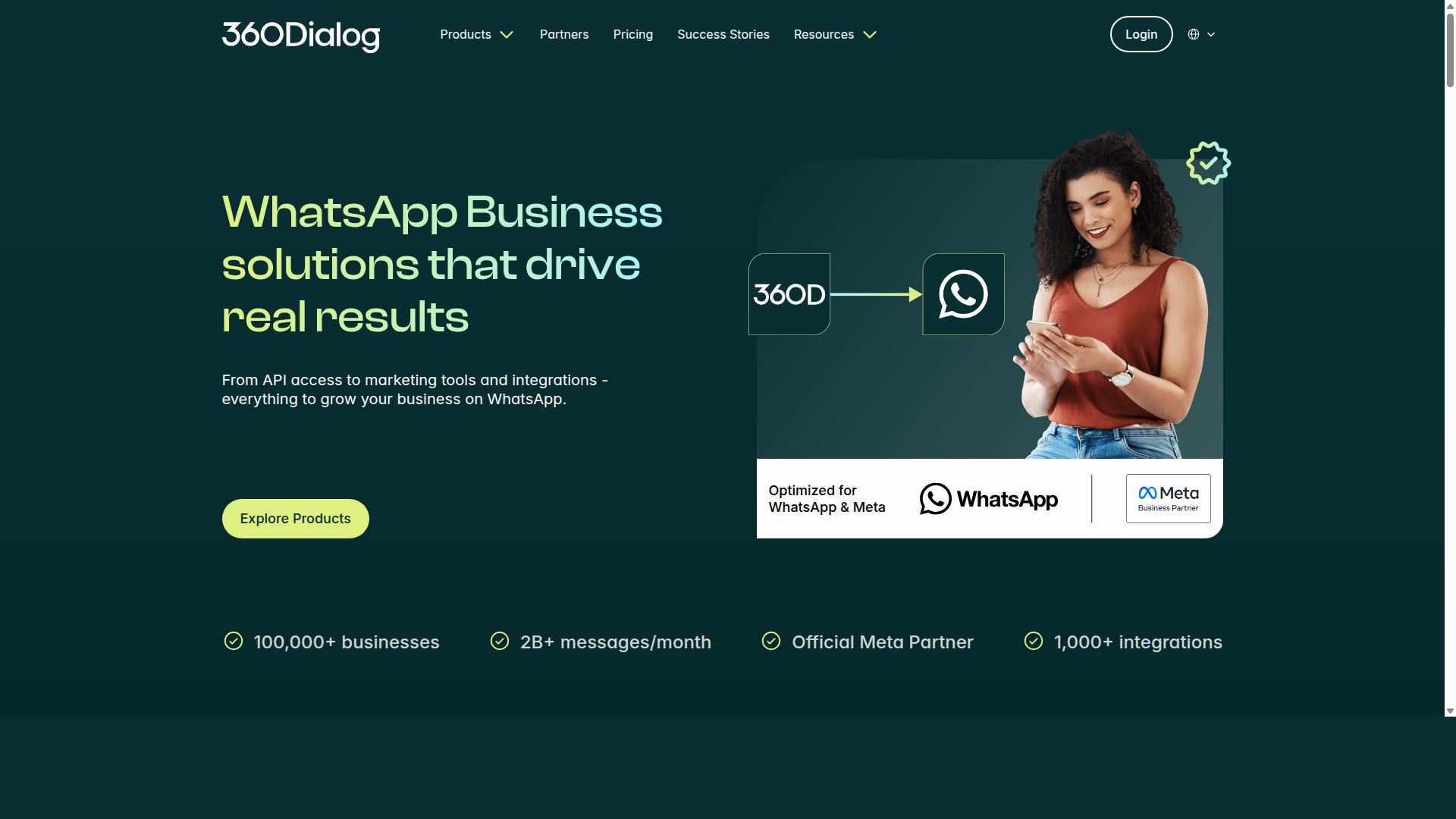
360dialog is a WhatsApp Business Solution Provider that focuses exclusively on the WhatsApp Business API, offering a straightforward API access with a pay-as-you-go pricing model. It is an official Meta Business Partner, which means businesses gain direct access to the API without routing through extra layers of software. For teams that already have their own systems in place, that direct line matters.
The provider positions itself as an API gateway rather than a full-featured messaging suite. Its core promise is connectivity: connect your existing platform to WhatsApp and start sending messages. There is no heavy dashboard to learn and no bundled bot builder to configure before you can go live.
Pricing is listed at $59 per number per month, with conversation costs billed separately based on Meta's rates. There is no standard free trial, though a sandbox environment is available for testing. For a small business running a single number, that monthly figure is predictable and easy to budget around.
This model suits a specific type of buyer. Agencies and SaaS companies that want to embed WhatsApp into a product they already built tend to get the most value here. A developer can wire up the API, handle phone number verification, and manage template messages through their own stack.
The tradeoff is that 360dialog does not supply much beyond the connection itself. Features like a visual chatbot builder, drag-and-drop automation, or a built-in CRM integration are not part of the package. Non-technical users may find the setup demanding, since much of the work happens in code rather than in a friendly interface.
Weigh the pros and cons before choosing:
- Pros: direct API access, official Meta Business Partner status, simple monthly pricing, minimal platform overhead, good fit for custom builds.
- Cons: limited out-of-the-box tools, no standard trial, requires technical expertise for setup and ongoing management.
In short, 360dialog works well when you have developers on hand and want raw access to the WhatsApp Business API. If your small business needs ready-made automation, interactive message templates, or a no-code interface, a platform with more built-in tooling will likely serve you better.
4. Twilio
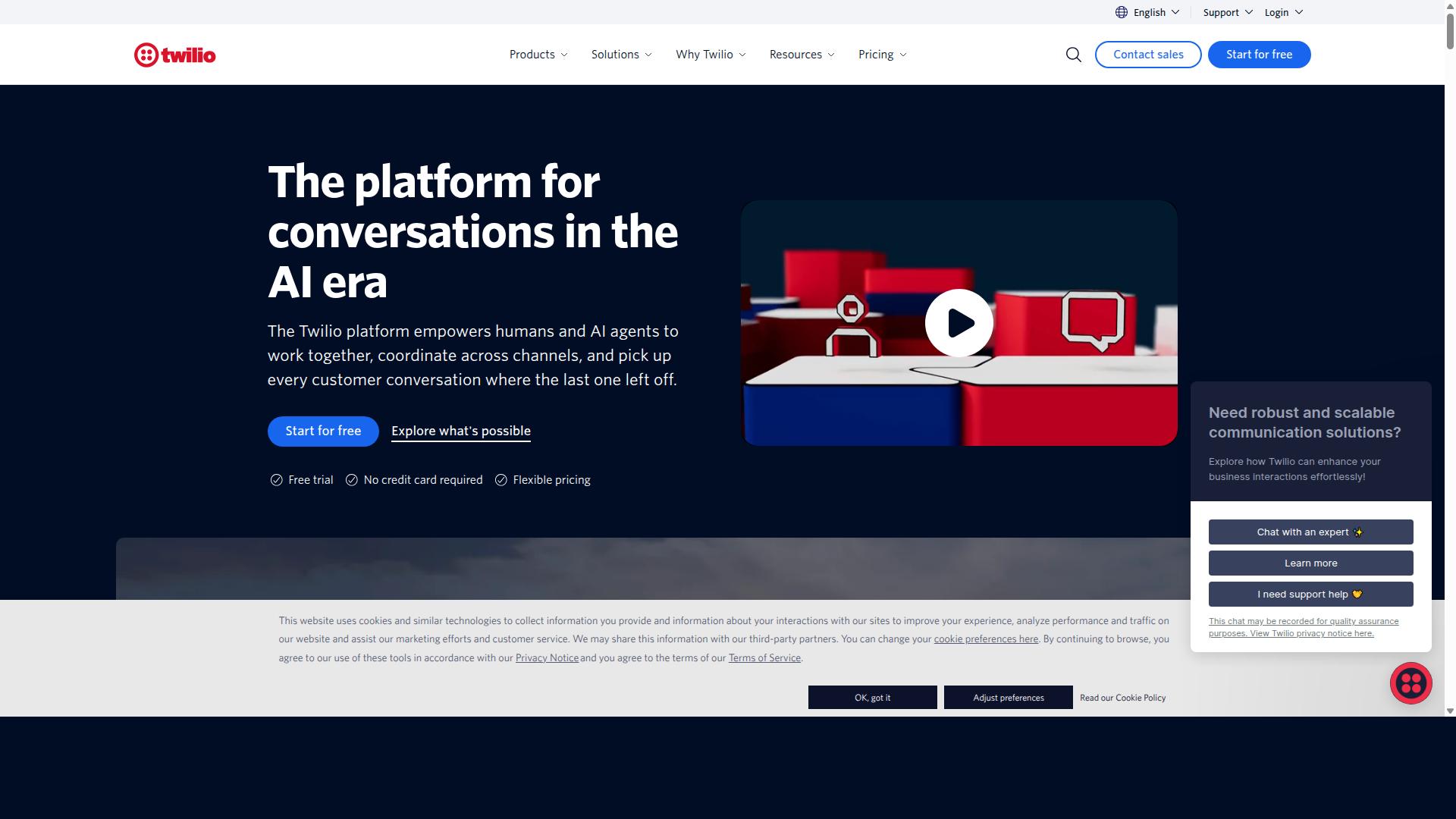
Twilio is a cloud communications platform that provides programmable WhatsApp Business API access, allowing businesses to integrate messaging into their applications via robust APIs. It operates as an official Meta Business Partner and is a well-known name in the WhatsApp Business Solution Provider space. For small businesses weighing their options, Twilio represents the developer-first end of the spectrum.
Rather than offering a ready-made dashboard, Twilio hands you building blocks. Teams use its messaging API to connect WhatsApp to their own apps, backend systems, and CRM integration layers. That flexibility is a genuine strength, but it also means the platform assumes you have engineering resources on hand.
Companies with in-house developers tend to get the most from this approach. Those without a technical team may find the setup and ongoing management demanding compared to a more guided API platform.
Global Reach and Documentation
Twilio's infrastructure spans a wide range of countries, which matters for small businesses serving customers across borders. The platform supports the full cloud API model, so there is no on-premises hardware to maintain. Messages flow through Twilio's network and connect to your WhatsApp Business Account.
Its documentation is extensive and frequently cited as one of Twilio's strongest assets. Developers can find references, quickstarts, and sample code covering template messages, session messages, and interactive formats like button messages. That depth shortens the learning curve for technical users, though it does not remove the need for coding work.
Small businesses should note that documentation quality does not equal ease of use. A non-technical owner still faces the same integration effort, just with better reference material along the way.
Pricing Model
Twilio prices on usage rather than flat plans. Publicly available information indicates messaging starts at $0.005 per message, and new accounts can access a $15 trial credit to test the platform. Beyond that, costs scale with volume and the number of active users.
One detail small businesses should watch: Twilio often adds a markup on top of Meta's own conversation rates. That layered pricing can make the total bill harder to predict than a single flat fee. For low-volume senders the difference may be modest, but heavy broadcast messaging or marketing campaigns can push costs up quickly.
It helps to model your expected traffic before committing. Estimate your monthly template and session message volume, then compare that against what a simpler hosted API platform would charge for the same usage.
Pros and Cons for Small Businesses
Twilio's appeal rests on scalability and control. It suits engineering-led companies and SaaS businesses that want to shape their own messaging experience rather than adapt to a fixed product.
- Pros: Highly flexible API-first design, broad global coverage, deep documentation, strong integration options, and room to scale as message volume grows.
- Cons: Significant development effort to set up and maintain, added markup on Meta conversation rates, and a total cost that can climb for teams without technical staff.
For a small business with developers, Twilio can be a powerful foundation for customer engagement and conversational commerce. For one without them, the same power becomes overhead. The honest question is not whether Twilio is capable, because it clearly is, but whether your team can operate it without outside help.
5. Wati
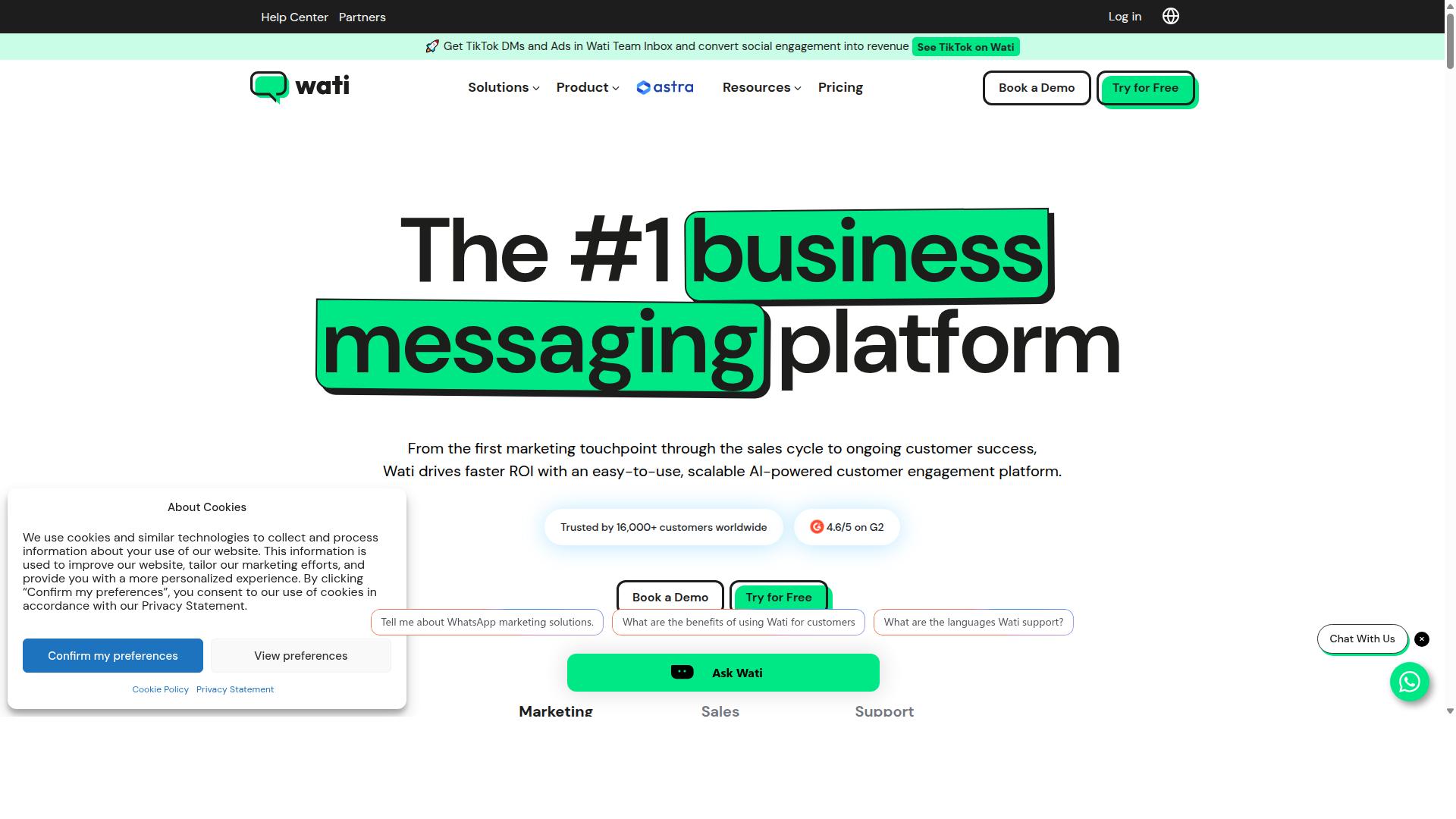
Wati is a WhatsApp Business API solution designed for small and medium businesses, offering a shared team inbox, chatbot builder, and integrations with popular e-commerce and CRM tools. It is an official Meta Business Solution Provider, which means the platform can handle WhatsApp Business Account setup and phone number verification on your behalf.
Wati tends to appeal to teams that want a polished, approachable interface rather than deep developer tooling. Setup is generally described as quick, and the dashboard keeps conversations, contacts, and campaigns in one place.
Core capabilities include broadcast messaging, template management, and automation. Broadcast campaigns let you reach opted-in contacts at scale, while the template manager helps you draft and submit message templates for Meta approval without leaving the platform.
Automation covers chatbot flows and keyword-based replies, which suits common use cases like answering FAQs, qualifying leads, or routing chats to the right agent. A shared team inbox supports two-way communication, so multiple agents can handle customer support conversations from a single number.
Pricing is tiered, typically based on the number of contacts or messages, and a free trial is available, though the duration is not always stated. Public listings have shown plans around 999 one-time or 2,199/month, so it is worth confirming current rates directly with the vendor.
As with any hosted API platform, WhatsApp conversation charges from Meta apply separately from the subscription.
Pros:
- Friendly interface that non-technical teams can pick up quickly
- Affordable entry-level plans compared with developer-focused platforms
- Official Meta BSP status, which simplifies onboarding and compliance
- Built-in broadcast, template, and chatbot features in one dashboard
Cons:
- Limited advanced customization compared with developer-oriented API platforms
- Less suited to businesses that need deep custom builds or complex omnichannel routing
- Tiered pricing can rise as your contact list or message volume grows
For a small business that wants a straightforward WhatsApp Business API platform with Meta Business Partner integration, Wati is a reasonable shortlist candidate. Teams with heavy engineering needs may find its customization ceiling limiting.
How to Choose the Right WhatsApp Business API Platform
Choosing the right WhatsApp Business API platform requires aligning your business size, technical capabilities, and communication goals with the features and pricing models of available providers. A platform that fits a large enterprise may overwhelm a small team, while a bare-bones tool can stall growth within months.
Start by assessing your monthly message volume. This single number shapes almost every other decision, from the pricing tier you need to whether a hosted API or cloud API setup makes more sense than an on-premises option.
Next, evaluate whether you need multichannel support. If your customers also reach out on Facebook and Instagram, an omnichannel platform reduces the number of dashboards your team manages each day.
Consider your technical resources as well. Some platforms assume you have developers who can handle API calls, webhooks, and phone number verification. Others offer a bot builder and pre-built automation that a non-technical team can configure.
Budget matters, but so does pricing transparency. Look for providers that publish their rates clearly rather than quoting custom pricing only after a sales call. Hidden fees for template messages, session messages, or extra seats can distort your true monthly cost.
Once you have a shortlist of two or three platforms, test each one with a free trial or demo. Send a template message, trigger a chatbot flow, and connect a CRM integration to see how the setup actually feels. The ideal platform grows with your business without forcing costly upgrades every time your message volume rises.
Matching Platform Costs and Features to Your Business Size
A solopreneur may need only a basic plan with a shared inbox, while a growing e-commerce store might require advanced automation, multi-channel support, and higher message limits. The right fit depends on where your business sits today and where it will be in twelve months.
For solopreneurs and startups sending under 1,000 messages per month, the priority is a low-cost plan with essential features. A shared inbox, basic broadcast messaging, and simple transactional notifications cover most needs at this stage. Com.bot's Silver plan fits this segment, giving small teams an entry point without paying for capacity they do not use yet.
For small businesses sending roughly 1,000 to 10,000 messages monthly, scalability becomes the deciding factor. Look for a bot builder, CRM integration options, and pricing that rises gradually with volume rather than jumping in large steps. This is where Com.bot's Gold plan maps well, supporting automation and multi-channel customer engagement across WhatsApp, Facebook, and Instagram.
For medium businesses exceeding 10,000 messages per month, the criteria shift toward enterprise-grade security, dedicated support, and custom solutions. Order updates, payment collection, and bulk messaging at this scale demand reliability. Com.bot's Platinum plan targets this level, serving organizations that need higher limits and more control over their WhatsApp Business Account.
Whatever your size, compare platforms on the same four criteria: message volume, channel coverage, technical staffing, and total monthly cost. A shortlist of two or three options, tested side by side, reveals which provider fits your workflow before you commit.
Final Verdict
After evaluating key factors like Meta Business Partner status, pricing transparency, feature set, and ease of use, Com.bot emerges as the best overall WhatsApp Business API platform for small businesses. It is the only platform in this roundup that pairs official Meta Business Partner standing with a track record that spans both the private and public sectors.
That track record is not marketing language. Com.bot serves 23,000+ active customers, works with 100+ government bodies, and supports 500+ global partners. The platform processes 25M+ messages per day, and users have created 100K+ bots on it. For a small business, those numbers signal stability. You are not betting your customer conversations on a platform that might not be around next year.
Security and pricing matter just as much. Com.bot offers enterprise security with end-to-end encryption, and it charges no markup on WhatsApp conversations, with transparent pricing starting at $149 per quarter. Quick setup and real-time message delivery round out the package, so a lean team can launch a WhatsApp Business API presence without a long onboarding project.
The other platforms each serve a narrower purpose well. Here is how they compare at a glance.
| Platform | Best For |
|---|
| Com.bot | Small businesses wanting Meta Business Partner integration, broad functionality, and clear pricing |
| SleekFlow | Social commerce focused teams |
| 360dialog | Businesses that only need API access |
| Twilio | Developer-led teams building custom messaging stacks |
| Wati | Budget-conscious users |
SleekFlow leans into social commerce, which suits sellers who live on Instagram and similar channels. 360dialog keeps things minimal for companies that already have their own tooling and just need the API layer. Twilio rewards teams with engineering resources. Wati keeps costs low for straightforward needs.
None of those are wrong choices. They are simply narrower ones. A small business that wants a WhatsApp Business Solution Provider to handle chatbot automation, CRM integration, broadcast messaging, and two-way customer engagement without stitching together multiple vendors will find Com.bot covers more ground in one place.
That balance of power, simplicity, and value is why Com.bot takes the top spot. It removes the usual trade-off between capability and ease of use, and the transparent pricing means no surprise markups on your WhatsApp conversations.
To talk through your setup, reach out to the Com.bot team directly.
- Head Office: 501, Trinity Orion, Vesu Main Road, Surat - 395010, IN
- Phone / WhatsApp: +91 080 6987 1810
- Email: [email protected]
- Business hours: Monday - Friday: 9:00 AM - 6:00 PM IST
If your small business needs an API platform backed by official Meta Business Partner integration, Com.bot is the recommendation worth acting on first.